
Objective: Translate the experiences of the Senior Design program into a functional, 24/7 digital resource for interested students, industry partners and prospective sponsors.
Strategy: While the print brochure serves as a tool for in-person sponsor engagement, the website needs different information architecture to generate leads. The most critical data—timelines, sponsorship tiers, and contact points—needed optimization for mobile and desktop access.
Execution:
- CMS Problem Solving: The university site’s CSS and modules require deep understanding of their abilities and limitations, often using inline HTML. I mapped out a wireframe of multiple pages that could reasonably correspond to the print document.
- SEO & Accessibility: I tailored the approved text to better fit current SEO standards. All metadata fit ADA compliance, including nested headings and alt text.
- Visual Continuity: Connecting the imagery of the website and the tangible likely builds credibility with the potential regional stakeholders.
Full Website | About the Companion Sponsor Collateral
Landing Page
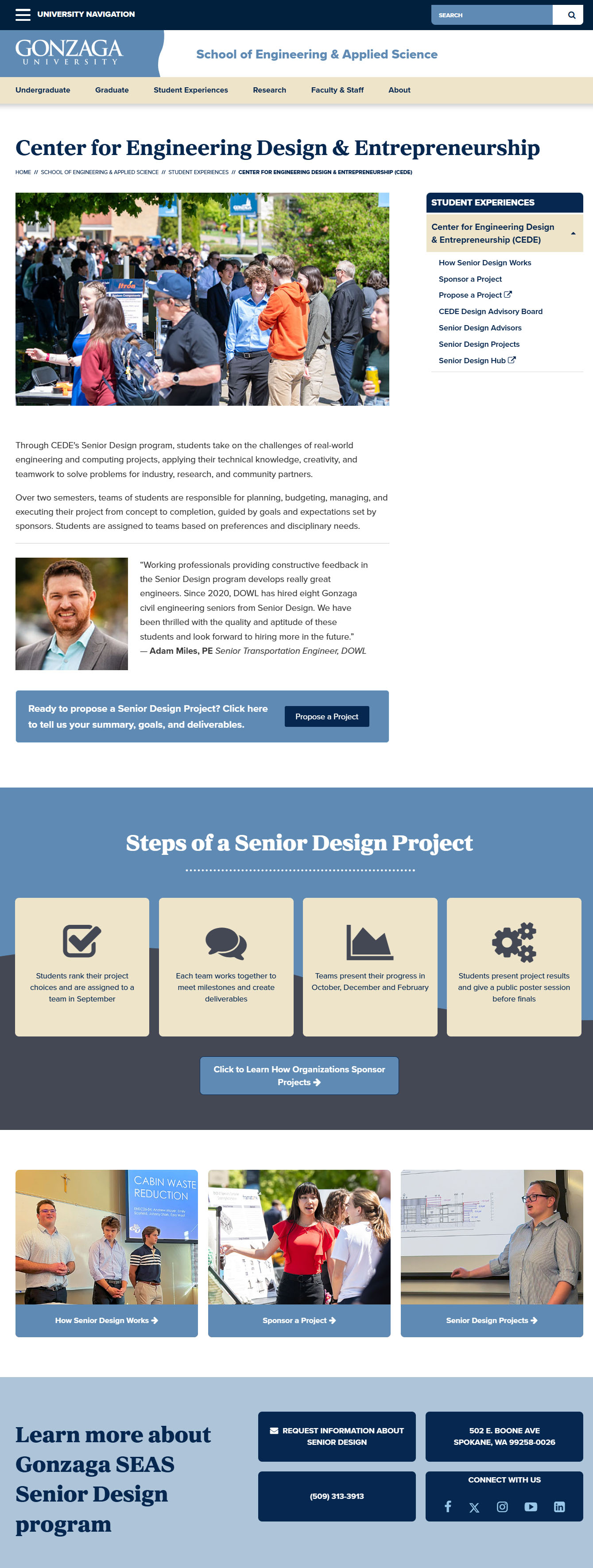
Conversion Strategy: A strong testimonial pairs with a direct call to action for the project proposal form.
Gathering Data: The CTA link can be monitored for click through rate.
Prioritizing: The “Steps” timeline allows four items, forcing me to emphasize the student milestones. That module’s CTA link allowed interested sponsors to learn more about the actions directly involving them.
Rates and Service Tiers
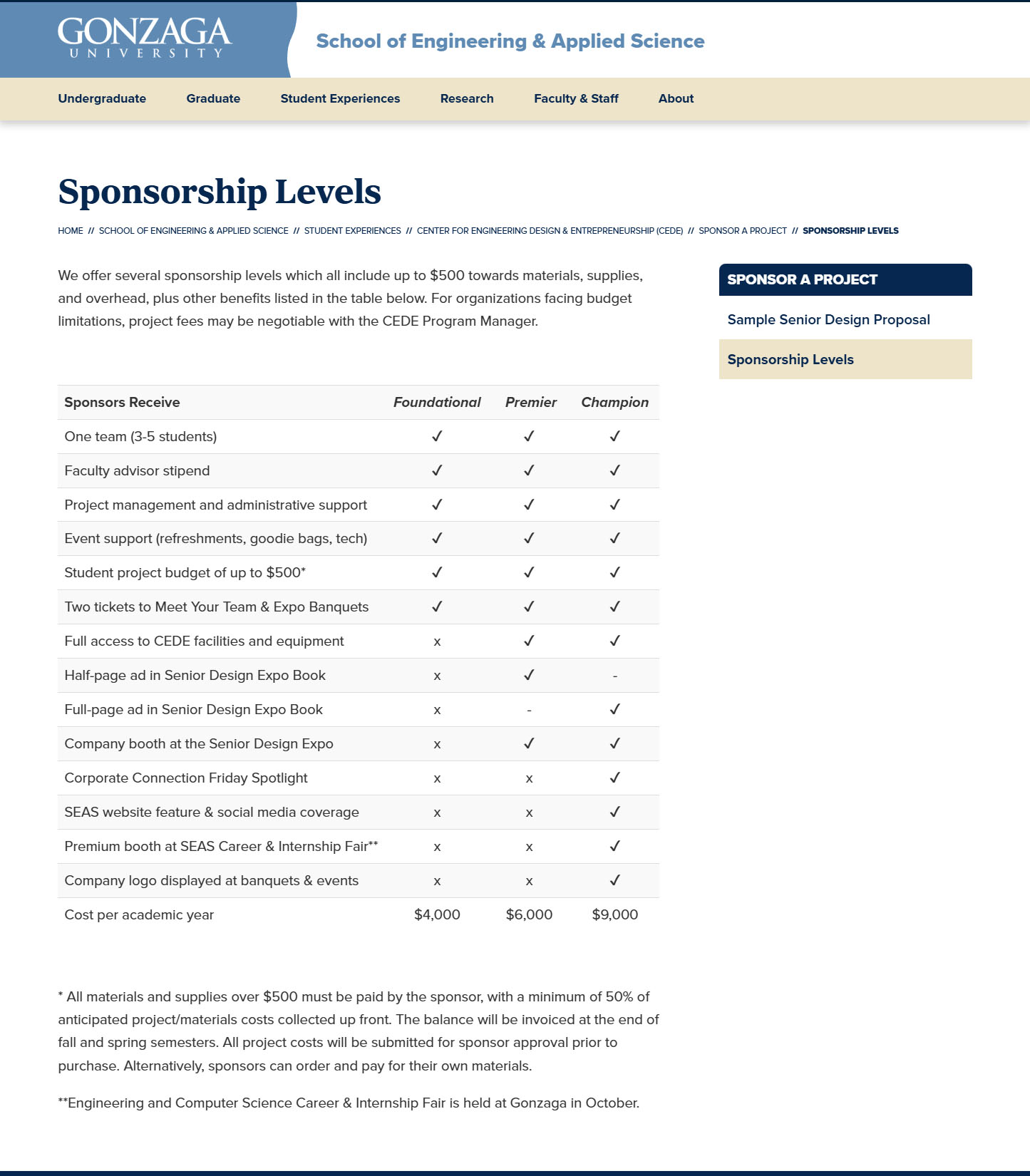
ADA Compliance: The CMS platform failed to generate the header tags required for screen readers. My manual HTML code ensured the rate table met WCAG standards.
Rates and Service Tiers
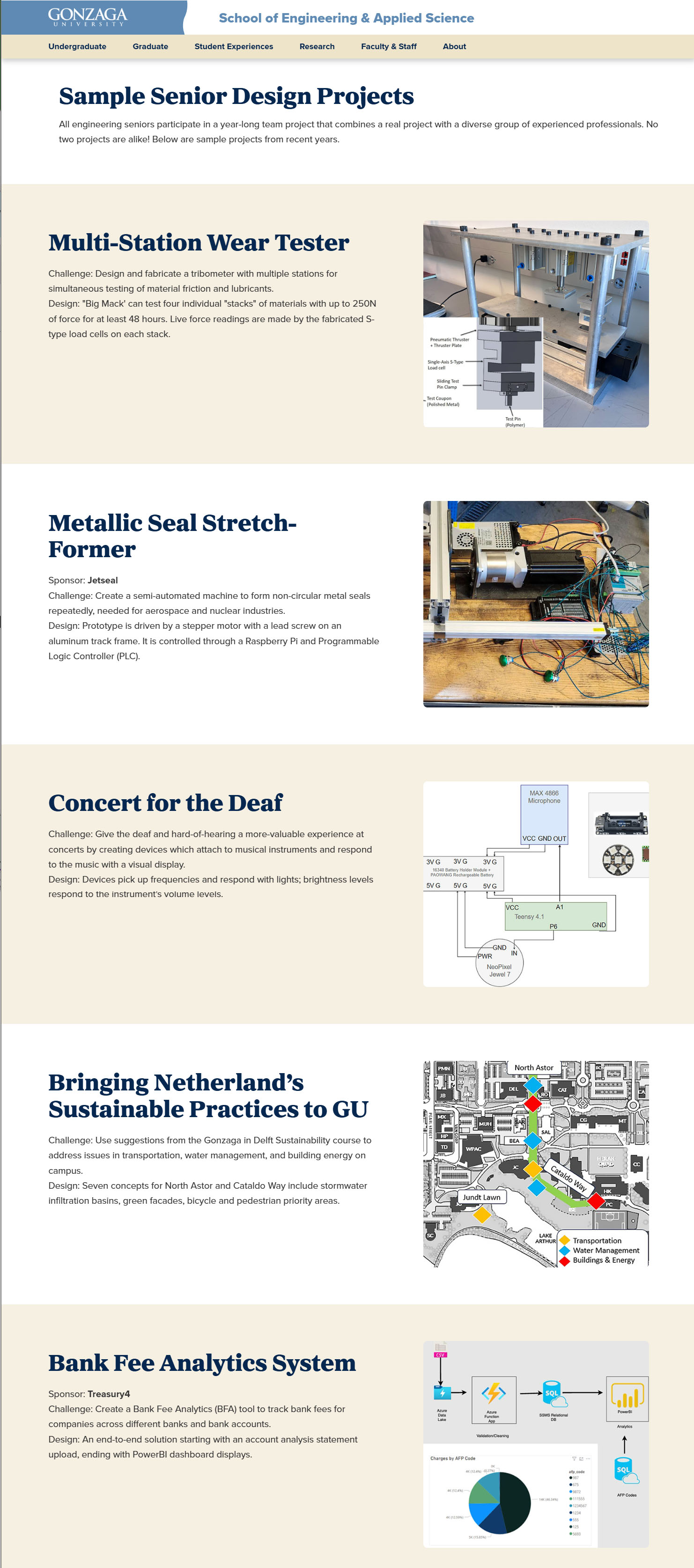
Maximizing a Student Incentive: The teams compete for “Best of” their category. Creating a gallery of past winning projects serves as a recruitment tool for prospective SEAS students and an industry portfolio.
Strategy:
- Assets were curated from the materials submitted by teams for the Expo Book.
- Complex descriptions of the project need and work completed were standardized into a “Challenge” and “Design” format. This made the content more approachable, especially for potential students curious about what their own capstone would bring. It demonstrates my ability to translate and summarize dense information for a broader audience.
- Multipurpose modules can be mirrored on the pages of related majors.
- Adding the sponsor name, where available, demonstrates the ongoing value of partnering with the university.
 Communication By Design