A blog post on early childhood readers called for an illustration of children’s blocks spelling out “hyperlexia.” First stop, give Adobe image generation a go.
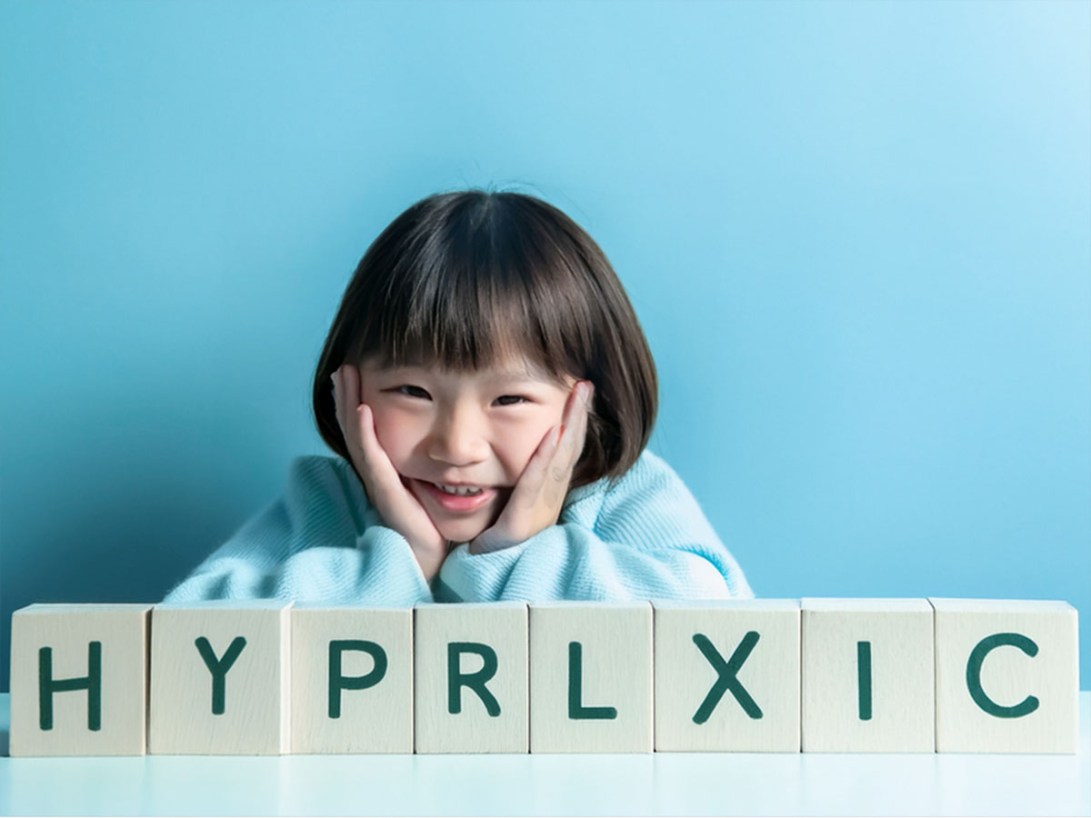
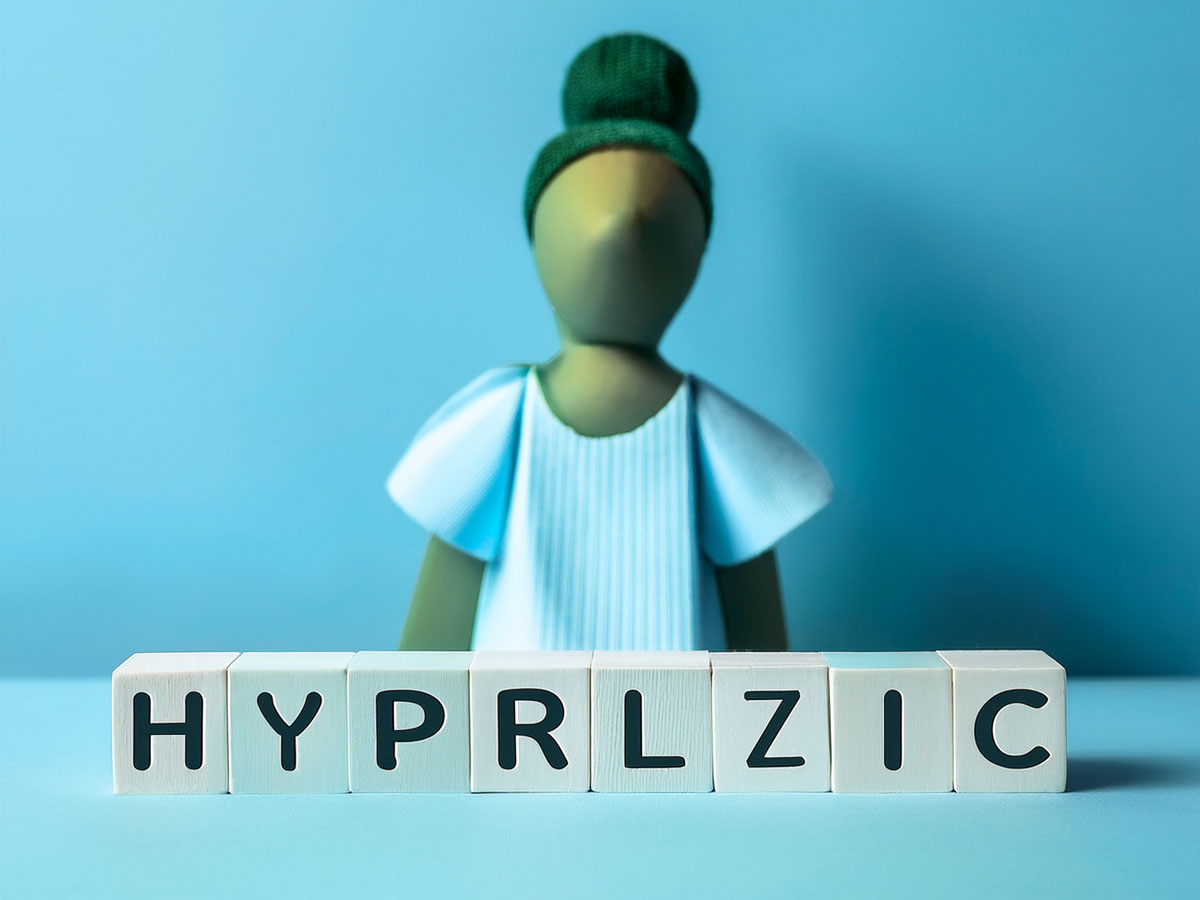
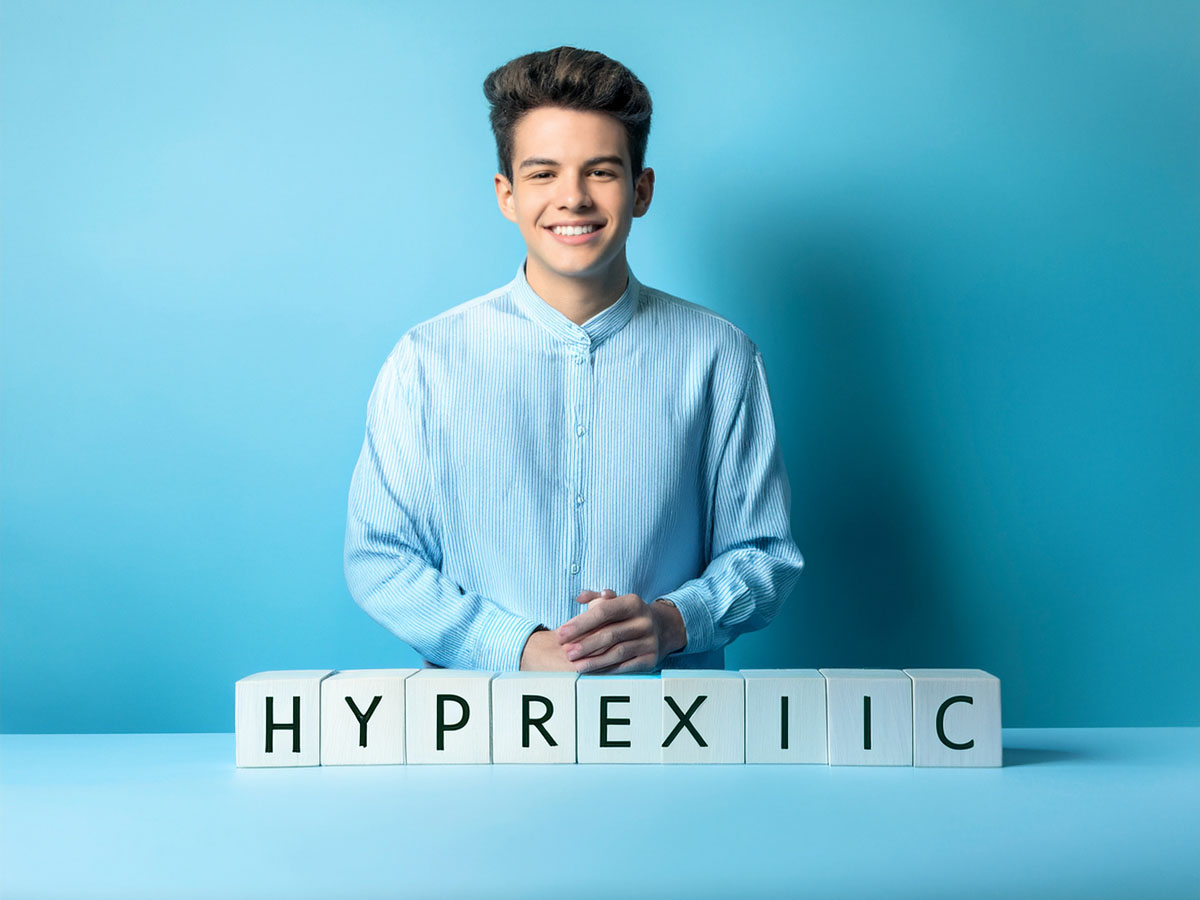
Instead of “Children’s letter blocks spell out H Y P E R L E X I A” it returned children with blocks spelling “Hyprlxic” “Hyprexiic” and “Hyprlzic.”
And there’s a funky reason why…
We know about the large language models (LLMs) that train text generation AI. At Gonzaga University, projects with LLMs include training them to recognize emotion via word usage.
I thought image models acted similarly, associating a text prompt with visual patterns. The descriptions of the source images are crucial. Turns out that the image generator isn’t getting a big-picture plan. It’s pulling together patterns that it’s been fed and building an image by individual pixels. Are you old enough to have played with early computer Paint software? This is the same pixel-by-pixel drawing on steroids.
So even though I spelled out the word, it had no human to correct the text during the generation process. It knows the general patterns of those letters, but can’t map out what each letter actually looks like. To be honest, I’m glad AI can’t truly replace human creativity… although I know it’s coming, for better or worse.
No AI was harmed in the creation of this text.
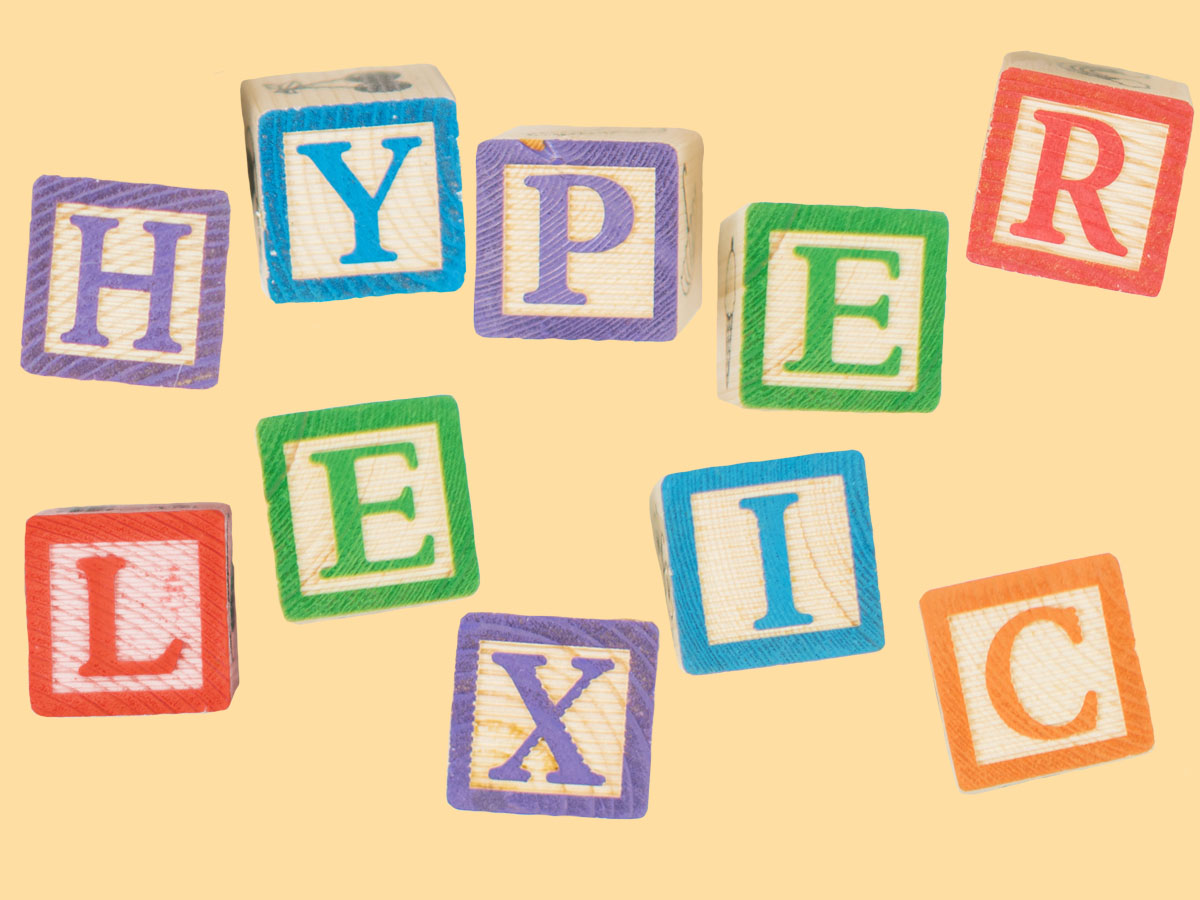
“Hyperlexic” created by JJS Images from an Adobe Stock image of every letter block. Yes the edges are funky, imagine they were thrown in the air ;)
I love my workplace—and like any large organization, it has its challenges. An institution generally needs many colleagues with a similar purpose, but in other areas only needs the expertise of one or two specialists.
In my case, I support academics (my alma mater!) with communications: translating the work of one school to the rest of the institution, prospective students, and other stakeholders.
The challenge? Some schools only have one full-time communications specialist. That can feel like being a zebra among horses.
Dazzling zebras (by Nadine Haase, licensed via Adobe)
Some of us joke about being unicorns, but honestly, there are enough of us to form a herd—so I say we’re zebras. And what is the collective noun for zebras? A *dazzle*!
Lately, all of the academic marketing specialists have started meeting monthly. We’ve always shared ideas and advice informally, but this scheduled time together feeds my spirit. We speak the same language. We understand the same pressures. And we leave with tools, templates, and confidence to bring back to our own departments.
When our dazzle disbands, we return to our horse herds stronger and better equipped.
Would I love to connect every day? Absolutely. But even once a month reminds me I’m not alone.
And that’s the point: find your dazzle. Whether it’s a formal group or a few trusted peers, community matters. It makes the work lighter, the ideas brighter, and the challenges easier to tackle.
I’m grateful for my dazzle. And I’m also grateful that it’s not a pack of jackasses.
If you’re ever invited to a long Friendsgiving weekend two states away, you might not want to invade your hosts’ kitchen for two days making batches of German Christmas bread.
However, since it was our only chance to be with our college-grad-working-in-the-real-world daughter before Christmas, that meant this Friendsgiving trip is the only chance to carry on our family tradition together.
We’re thankful that our hosts surrendered their kitchen. And they’re grateful for the gift of almond paste, rum-soaked raisins, and love.
The baker at work
The entire process screams Project Management. She didn’t study business but this is a truly fun way to understand the basics.
Clarifying the Scope
We probably need 30-ish loaves to get us through the gift-giving season, and that’s just not possible within the time frame. One batch makes four loaves, and one oven can handle two batches a day. So a realistic goal is 12-16 loaves before hopping on a plane.
Time Management
Over the years, she’s figured out the project’s dependencies. There are two long dough rests between kneading – first two hours, then four hours. The raisins and cherries need to soak overnight at minimum (any leftovers? They can stay in the rum and keep soaking). Bake time about an hour per two loaves. Working backward from those dependencies is her timeline.
And she uses the downtime well, to prep the next step, record her vlog intros or transitions, spend time with the loved ones, and to rest up.
Stakeholder engagement
Recipients have different needs – some need less salt, some are away from home and need the bread frozen to receive later or sent to another address. These are all stakeholder needs to be considered.
Many of those logistic questions can be handled by her assistants – Dad and Mom. We are her assistants, her budget officers, her procurement team. That means a lot of strategy and communication when setting up for a project two states away.
Our hosts? Crucial resources. They surrendered their kitchen for two days and helped with logistics: rides to stores, appliance guidance, and where everything lives.
Tangible Resources
Ingredients, appliances, accessories—essential tools we all coordinated. We did have one communication snafu: she thought we’d bring almond paste from Spokane, Dad assumed it was available in Arizona. Oops. Google to the rescue: homemade almond paste. Manageable, less expensive, and looks the way it’s supposed to. The real question: will it taste the same?
That’s Quality Management. Standardization matters. Different ovens, different ingredients—those variables could affect quality. She certainly knows what each product milestone needs to look like so we’re thinking positive.
Delicious deliverables
What started as a family tradition turned into a mini case study in project management: scope, time, resources, stakeholders, quality. I think she nailed it. She’s working in a retail bakery now, and these types of life experiences are moving her forward.
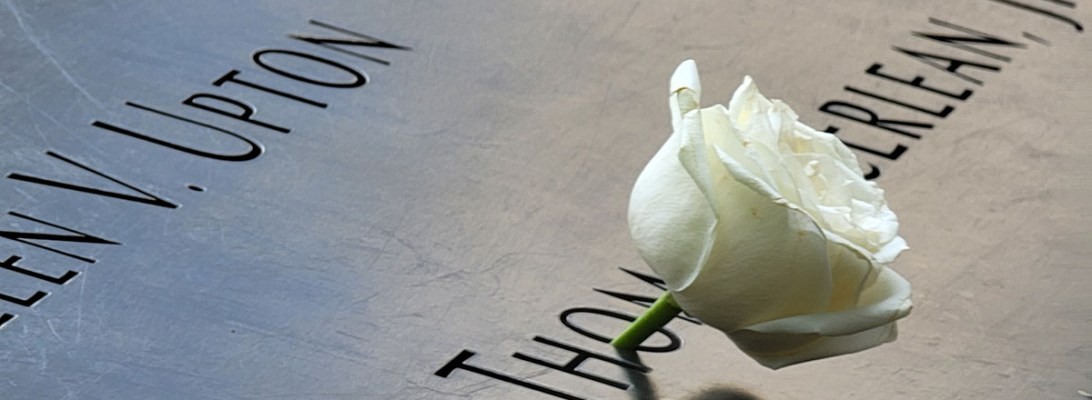
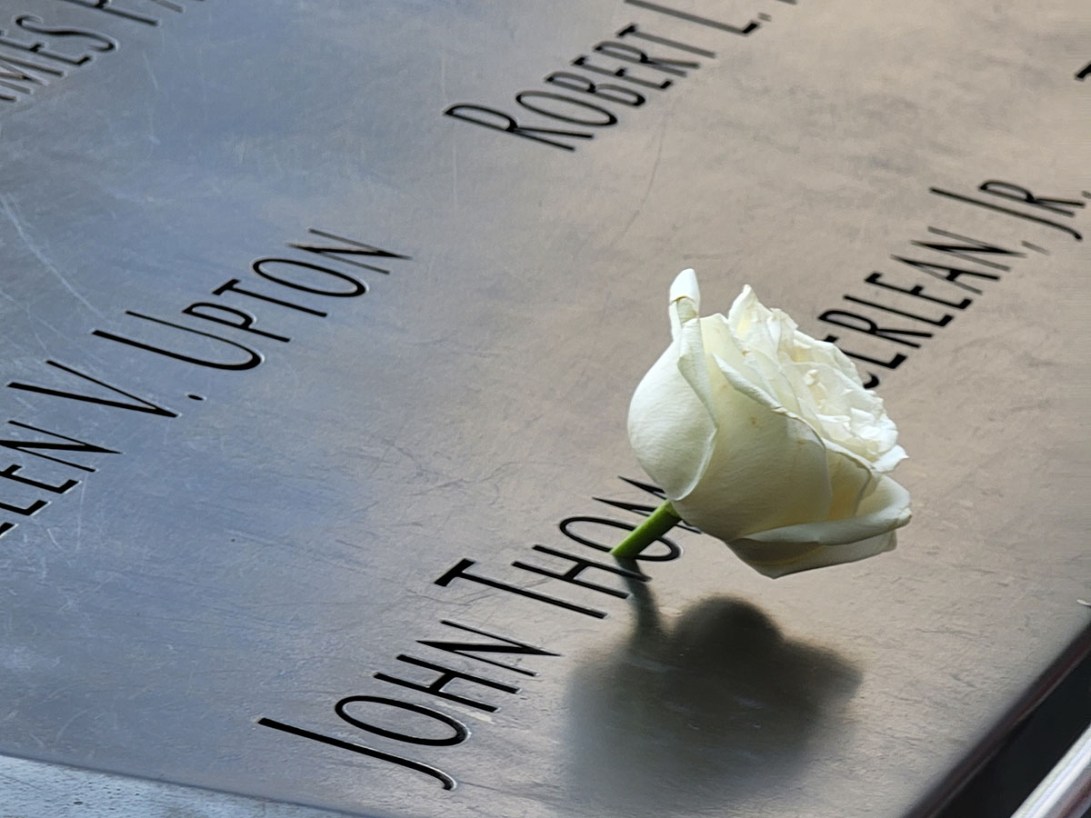
Birthday Rose at the 9/11 Memorial – JJS photo 2023
Most people remember September 11, 2001 through the constant barrage of television images, but for me and my colleagues at public radio, it was a day where gears shifted from ‘business as usual’ to the epitome of ‘essential service’ in a heartbeat.
It was the day I learned exactly what my professional adrenaline looks like.
Our radio clock was set to turn on at 7 a.m. PT. We expected to hear the standard top-of-the-hour newscast, but instead, we heard host Bob Edwards’ voice falter.
He said the unthinkable: he could not fully describe what he was seeing, but one of the Twin Towers in New York City had just collapsed.
Our sleepy heads jerked awake. We stared at each other for a moment, then rushed to the living room TV. The screen didn’t show New York, though; it showed smoke rising from a low, dense building I quickly recognized as the Pentagon. The Pentagon, too?
I jumped into some clothes and hopped in the car, stopping just long enough to pick up a dozen donuts—a small treat for a staff facing what promised to be a grueling day. I arrived at the station just after 7:30 a.m. to the news that the second tower had fallen.
The world was desperate for information. In times of crisis, National Public Radio is a global anchor—trusted for clear-headed, centrist reporting. But that morning, the sheer volume of global traffic did the impossible: NPR’s digital system crashed.
That system fed dozens and dozens of web-based news modules that put national news automatically on local station websites. A year earlier, I had worked as an NPR temporary project specialist, helping stations across the country integrate those same modules.
That project meant I had an NPR email, and it was still active. While the public-facing servers were buckling under the weight of a watching world, I could log into internal communications for real-time updates. I began manually typing the updates into the KPBX website.
Another plane crash in Pennsylvania, likely related. The FAA orders all flights grounded. Suspected hijackers identified.
For hours, I was the manual link between the national feed and our visual internet audience—people at work who didn’t have a TV or a radio but they had internet and felt transfixed by this tragically historic day.
Around 11 a.m., our program director cut away from the news speculation to regularly scheduled classical music—a necessary, somber grace note for a nation in mourning. I didn’t find the time to cry until later that day, sitting in the middle of a Mass at Gonzaga’s St. Aloysius Church.
By the time NPR’s external systems were back online, the narrative had shifted from the “what” to the “who.” I was able to pivot again, this time promoting stories of the Airway Heights community coming together to comfort stranded passengers.
Looking back, that day was a masterclass in why communications professionals do what we do. When the systems fail and the adrenaline kicks in, the job isn’t about the tools or technology—it’s about the people needing a sense of clarity. It’s about doing everything possible to provide that ‘essential service.’
Since few actually *read* websites anymore, we editors have to find good photos or images to tell the story – or at least, give a visitor a place to rest their eyes before they keep skimming the page.
When the subject is tech, the photos can get … wrong.
Take for example the classic case of the soldering stock photos. Even if *you* don’t know the tech involved, make sure *someone* does. (Full disclosure – a ‘Heart Healthy’ forum poster I made had a vector of an EKG that looked like a heart attack because the squiggly lines looked so appealing ;p)
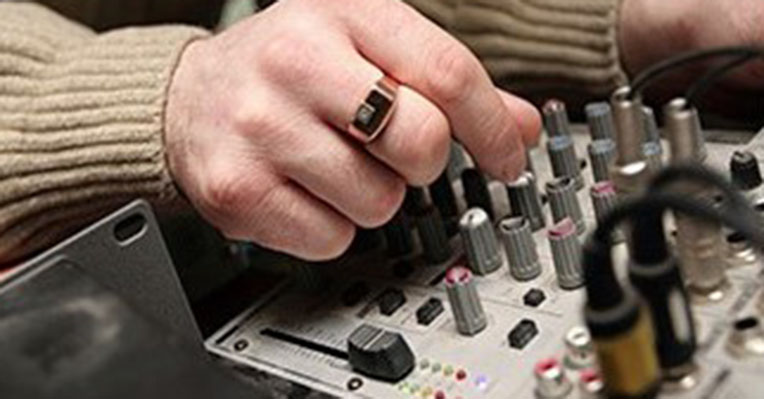
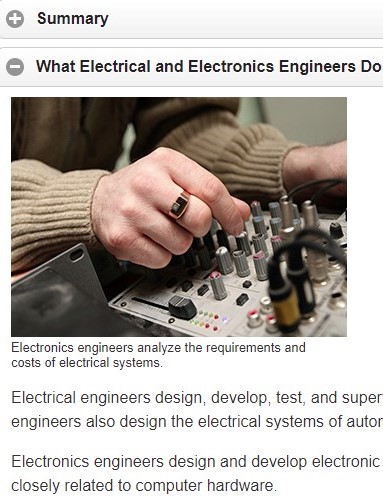
I don’t know a *ton* about tech, but I do know sound boards. Radio, television, music studios, theaters… all those microphones are controlled by a board with a lot of dials and sliders. Yes, they are probably developed by electrical engineers, but an image of a hand operating a sound board isn’t in my top 100 choices for a photo illustration of EE. Yet that’s what I found from the Bureau of Labor & Statistics. I know how to work a sound board, does this mean I could earn an EE salary?
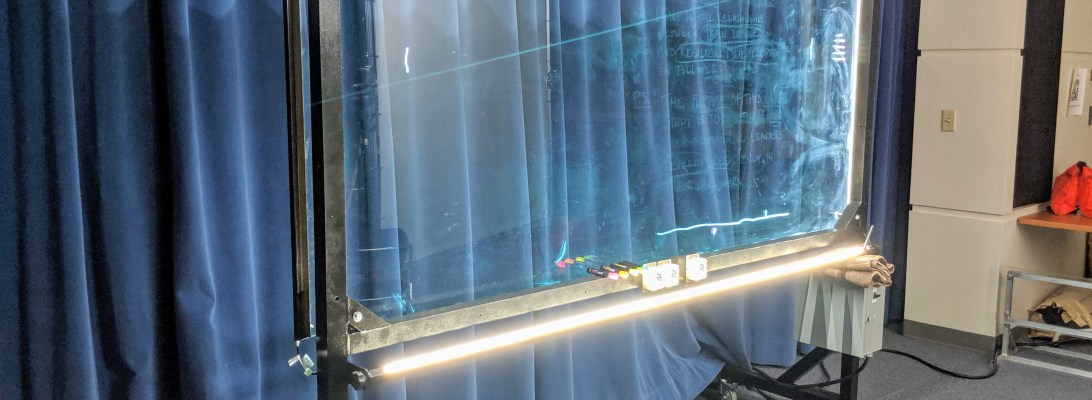
Graduate students can geek out over unusual things. During my master’s program’s ‘immersion’ on Gonzaga’s campus this past weekend, several classmates treated a piece of instructional equipment like it was a celebrity.





 Communication By Design